
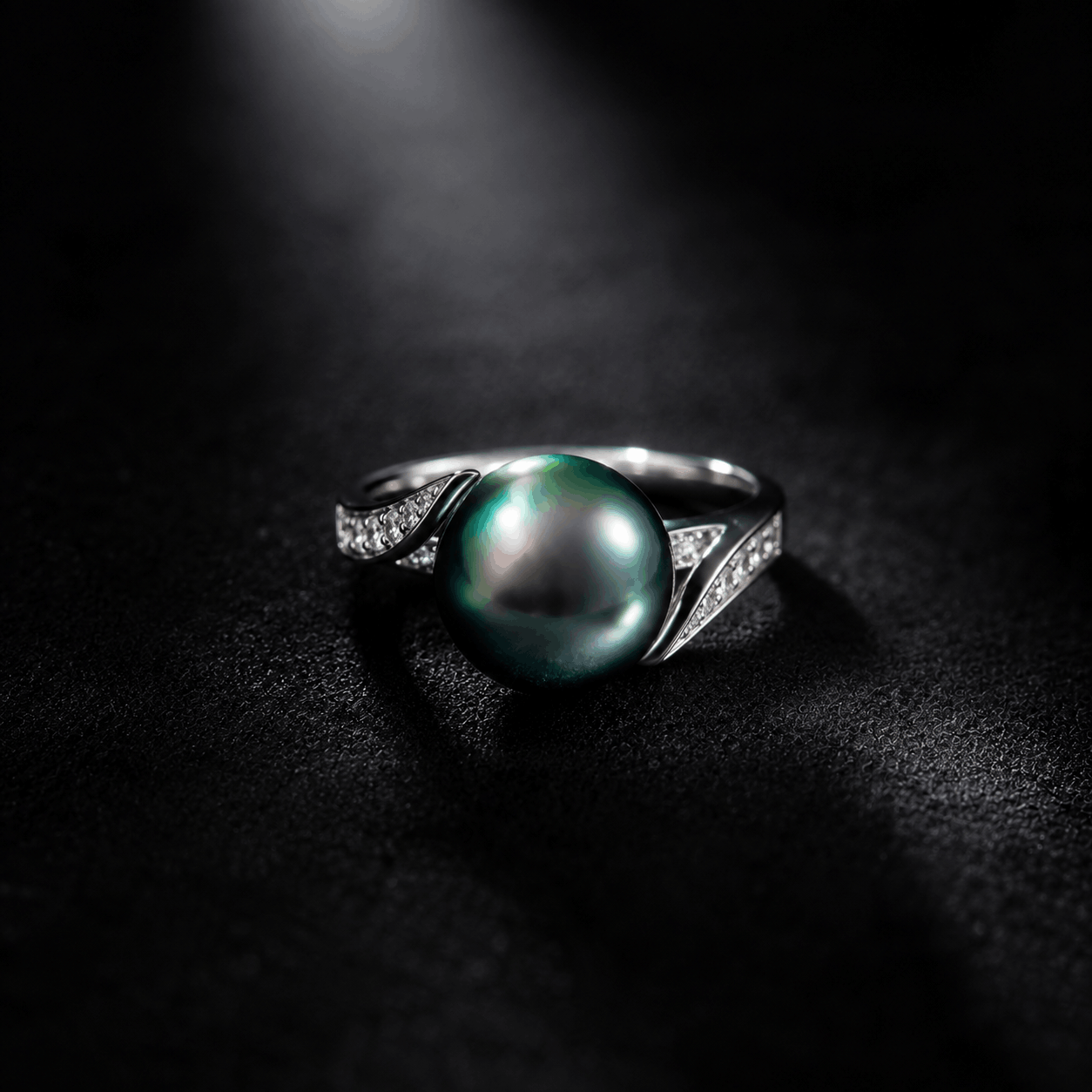
For år tilbage prøvede jeg en Tahiti-perlering på en vens anmodning – mest for at være høflig. Jeg forventede ikke at kunne lide den. Perlen fangede lyset og blinkede i en dyb påfuglegrøn, som jeg ærligt talt aldrig havde set i smykker før. Den skiftede til sølv og tilbage igen afhængigt af, hvordan jeg bevægede hånden. En time senere havde jeg købt den. Det er det særlige ved Tahiti-perleringe – de fotograferer godt. Men i virkeligheden er de ærligt talt endnu smukkere, end noget billede formår at indfange.
Hvad gør Tahiti-perleringe så særlige
Tahiti-perler vokser i den sortlæbede østers, der findes i Fransk Polynesien. De er den eneste store perletype, der naturligt producerer mørke farver. I de fleste tilfælde ikke egentlig sort. Tænk dyb antracit, sølv, aubergine og den berømte påfuglegrønne overtone, der skifter alt efter lyset. På en halskæde fremstår farven elegant på afstand. På en ring, som man bærer tæt på øjet hele dagen, bliver den samme farve noget, man virkelig lægger mærke til og værdsætter, hver eneste gang man kigger på sin egen hånd.
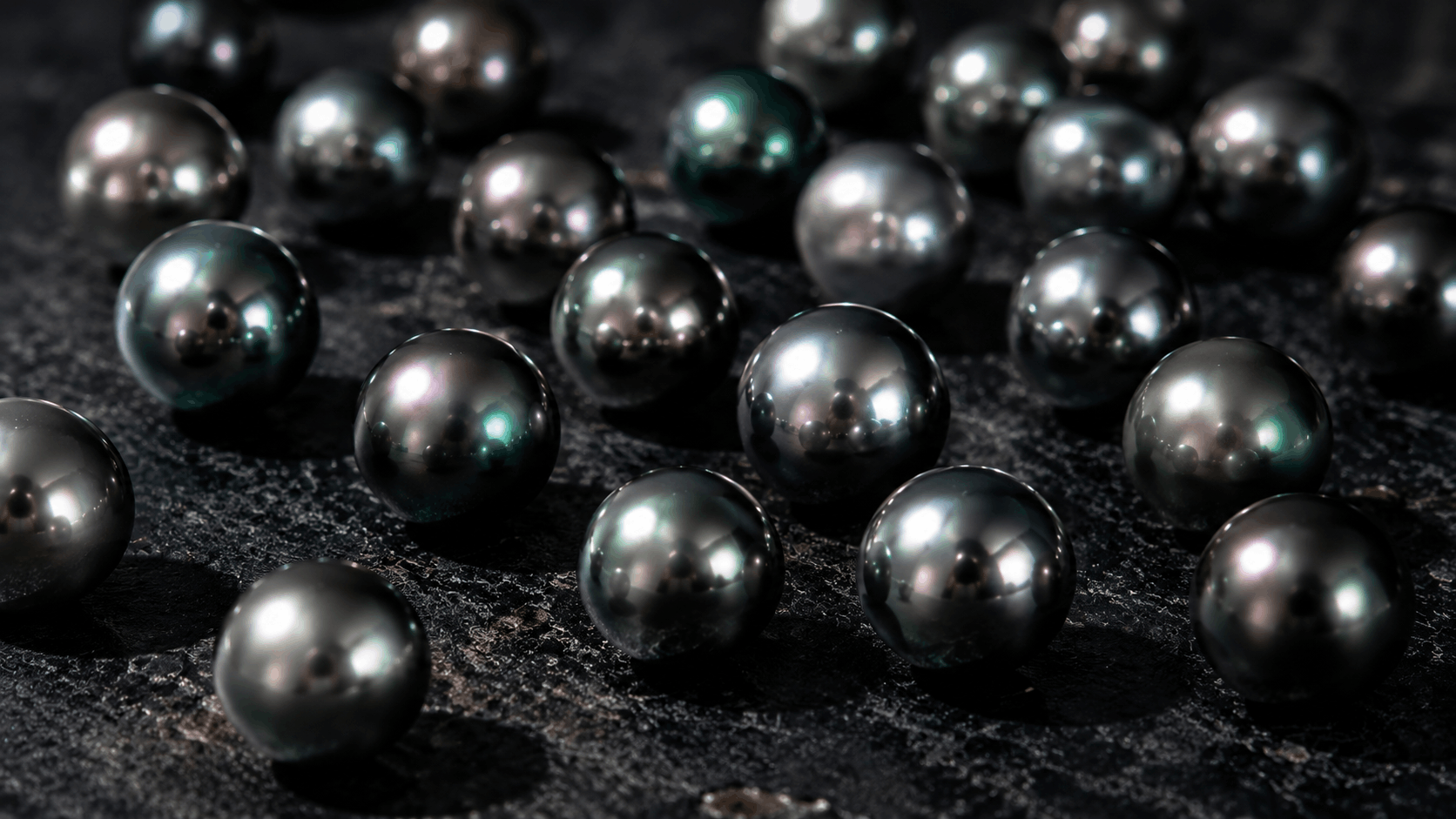
Størrelsen ligger typisk over Akoya, som regel mellem 8 mm og 12 mm. Det giver Tahiti-perleringe en ægte visuel tilstedeværelse uden behov for en overdimensioneret fatning som kompensation. Perlen selv klarer det meste af arbejdet, og fatningen behøver blot at holde den sikkert fast i stedet for at forsøge at få den til at se større ud, end den er.
Valg af den rigtige fatning
Enkle klofatninger lader perlen stå i centrum og viser farveskiftet uden at noget konkurrerer om opmærksomheden. Det passer især til købere, der ønsker, at perlen selv er hele statementet, i stedet for at dele rampelyset med udsmykket metalarbejde. Bezelfatninger omslutter perlens kant med en tynd metalrand, giver mere fysisk beskyttelse til daglig brug og holder samtidig designet rent og moderne.
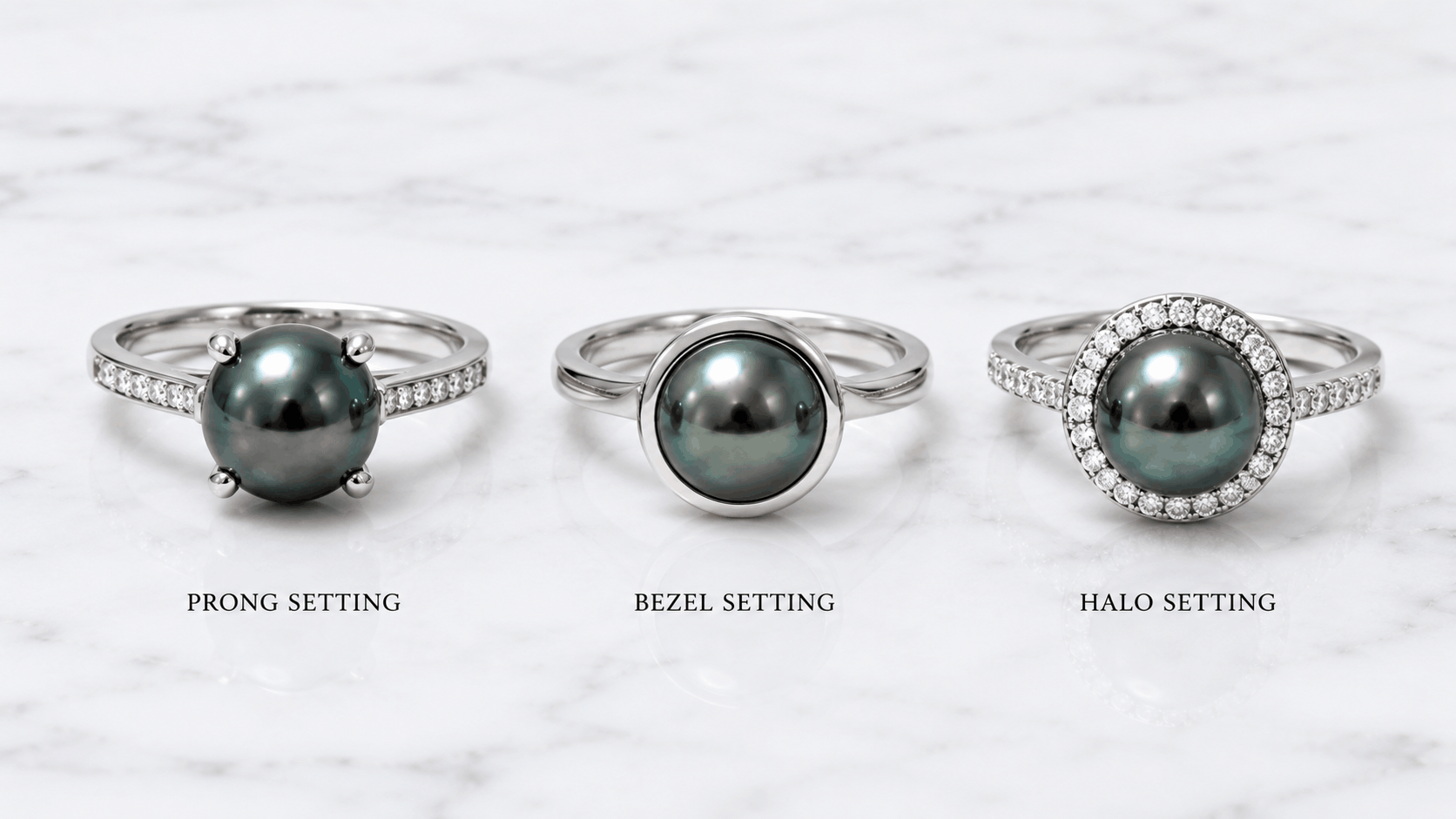
For mere glitter tilføjer en halo af små diamanter omkring perlen kontrast. Den får den mørke farve til at poppe endnu kraftigere op imod de lyse sten. Og split-shank eller snoede bånddesigns er blevet særligt populære til Tahiti-perleringe, fordi den mere nutidige båndstil matcher naturligt med perlernes ukonventionelle farve i stedet for at virke traditionel og lidt misvisende.
Metals valg og hvordan de påvirker udseendet
Hvidguld- og platinfatninger skaber en kølig, moderne kontrast til perlernes mørke toner og lader farveskiftet fremstå skarpt og nutidigt. Denne kombination fotograferer særligt godt og er generelt det mest populære valg til Tahiti-perleringe. Gult guld tilbyder et varmere alternativ, og kontrasten mellem varmt metal og kølig perlefarve kan se virkelig slående ud i stedet for misvisende – især med perler, der har mere sølv- eller aubergine-overtone.
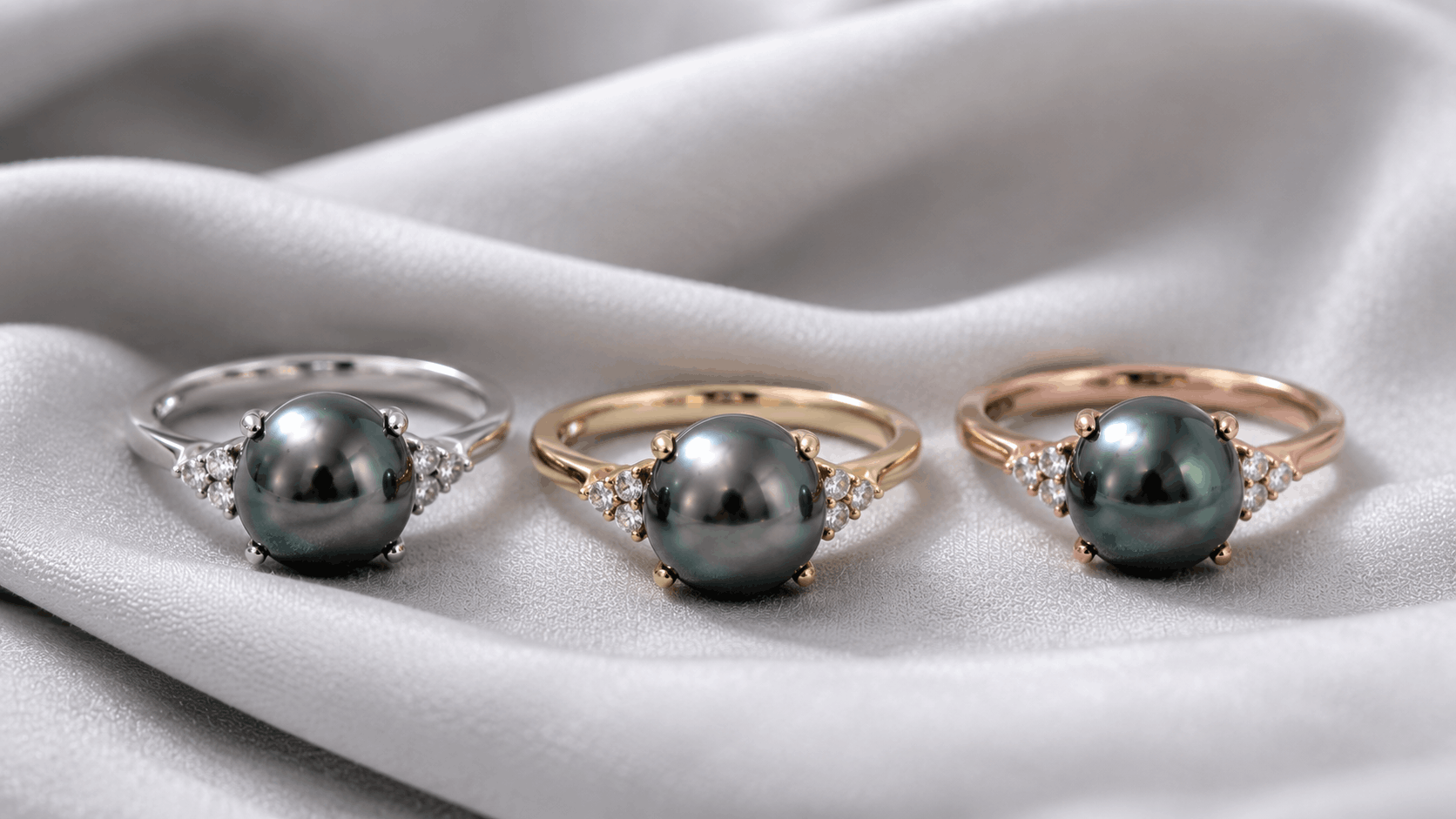
Rosaguld er også blevet stadig mere populært. Det blødgør dramaet i den mørke perle en smule og skaber en mere romantisk helhedsfornemmelse. Det rigtige metal handler altså om, om du vil have ringen til at føles skarp og moderne eller varmere og mere romantisk – begge dele fungerer rigtig godt med denne perletype.
Størrelse og bæreevne
Fordi Tahiti-perler er større end de fleste andre perletyper, sidder ringe med dem lidt højere på fingeren end en almindelig ædelstensring. Det er værd at prøve på personligt, hvis det overhovedet er muligt, da højden påvirker, hvordan ringen føles under hverdagsopgaver som at skrive eller køre bil. Nogle købere elsker den tilstedeværelse. Andre foretrækker bevidst en mindre perle for at holde ringen lavere til daglig brug.
At ændre størrelse på en ring med en stor perlefatning kan være mere kompliceret end på et almindeligt bånd, fordi fatningen selv muligvis skal justeres sammen med metalbåndet. Få derfor din størrelse ordentligt målt inden bestilling i stedet for at antage, at en standardstørrelse fungerer – især ved bezel- eller halo-fatninger, hvor hele designet skal forblive proportionelt efter en størrelsesændring.
Hvad der bestemmer kvalitet og pris
Glans kommer først – præcis som ved alle andre perletyper. En Tahiti-perle bør have ægte glans og dybde og ikke se flad eller mat ud. Og det er netop den glans, der gør farveskiftet synligt, når du bevæger hånden. Overfladekvaliteten følger standardgradering, typisk fra A til AAA, hvor færre fejl betyder højere værdi og et renere samlet udtryk i en fatning, hvor hele perleoverfladen er synlig.
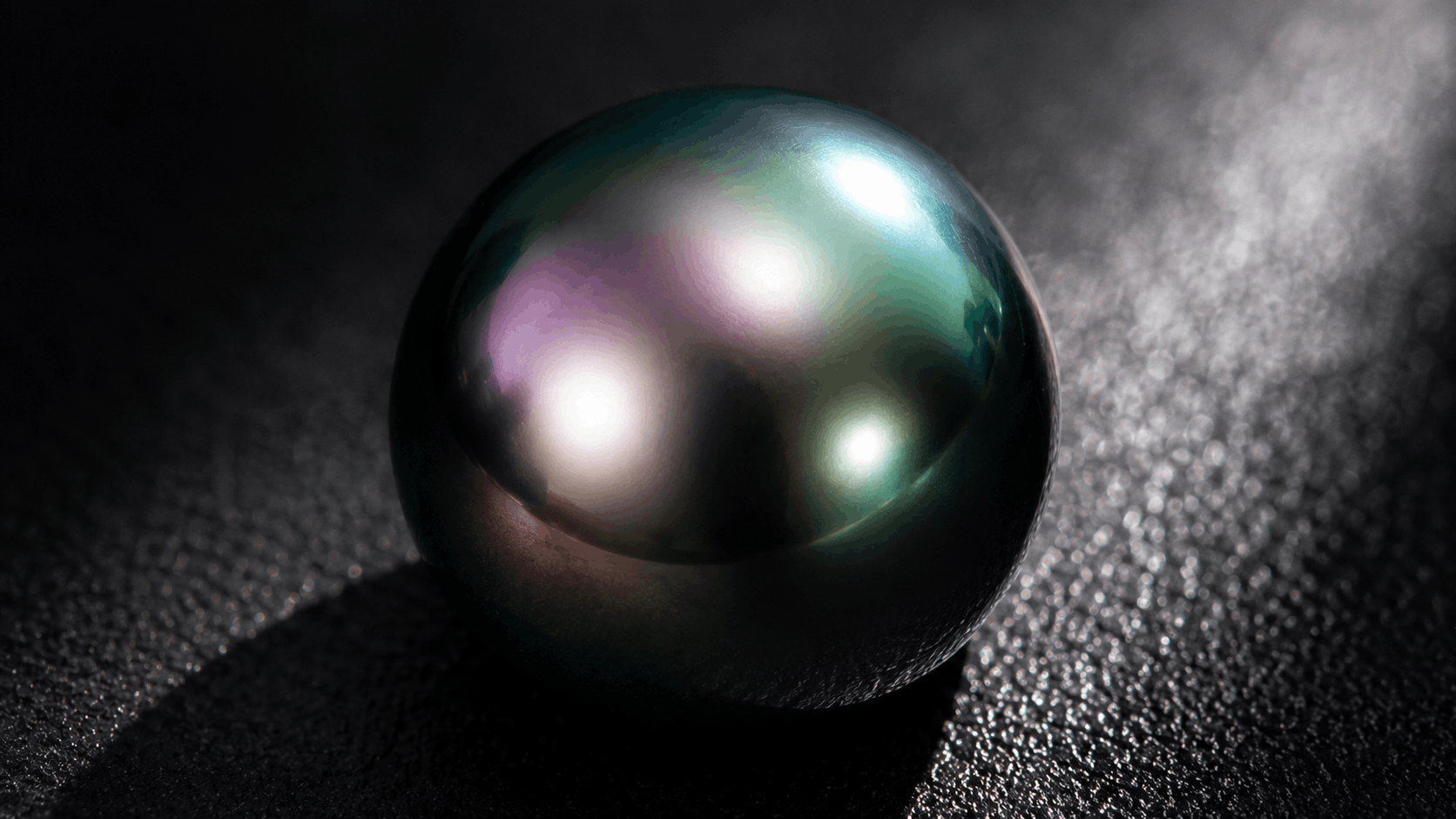
Farveintensitet betyder mere her end ved de fleste andre perletyper. Fordi dybden og intensiteten af den påfugle- eller aubergine-overtone virkelig varierer fra perle til perle. En stærkt farvet Tahiti-perle med høj glans i en enkel fatning ser ofte mere imponerende ud end en blegere perle omgivet af udsmykket metalarbejde, der forsøger at kompensere. Priserne for ægte Tahiti-perleringe starter typisk omkring 200 $ for mindre perler i enkle sterling sølv-fatninger. De stiger til 800 $ eller mere for større perler med høj glans i guld eller platin med diamantaccenter.
Køb Tahiti-perleringe med tillid
Bekræft altid, at perlen er ægte tahitiansk og ikke en farvet ferskvands- eller Akoya-perle solgt under et lignende navn. Prisforskellen mellem de to er betydelig. Og farven på en farvet perle ser typisk fladere og mere ensartet ud end den naturlige irisering på en ægte Tahiti-perle. Bed om dokumentation, der bekræfter oprindelsen, før du køber noget, der beskrives som tahitiansk.
Hos PearlsOnly kommer hver Tahiti-perlering med et ægthedscertifikat, der præcist bekræfter, hvad du køber. Der er derfor ingen gætteri. Gennemse hele kollektionen for at sammenligne farver, fatninger og størrelser, og find det stykke, der fanger lyset, som du håber på.
